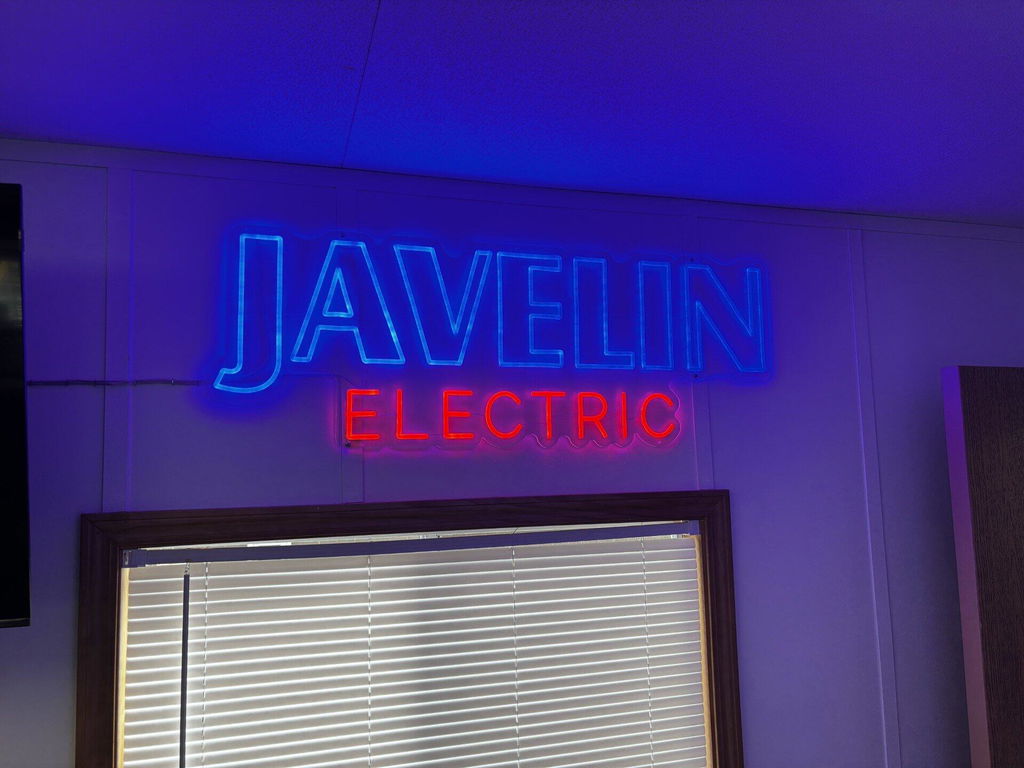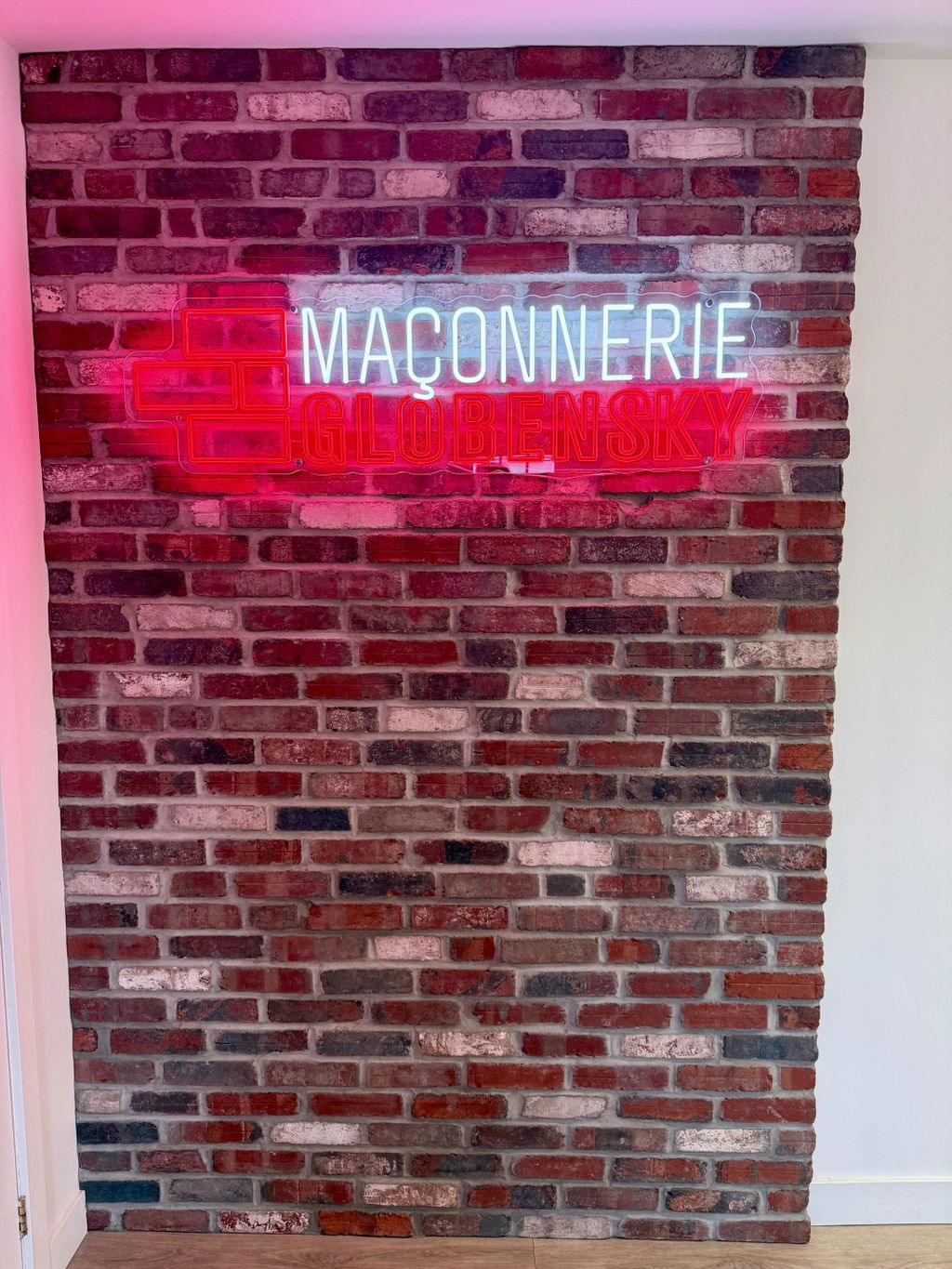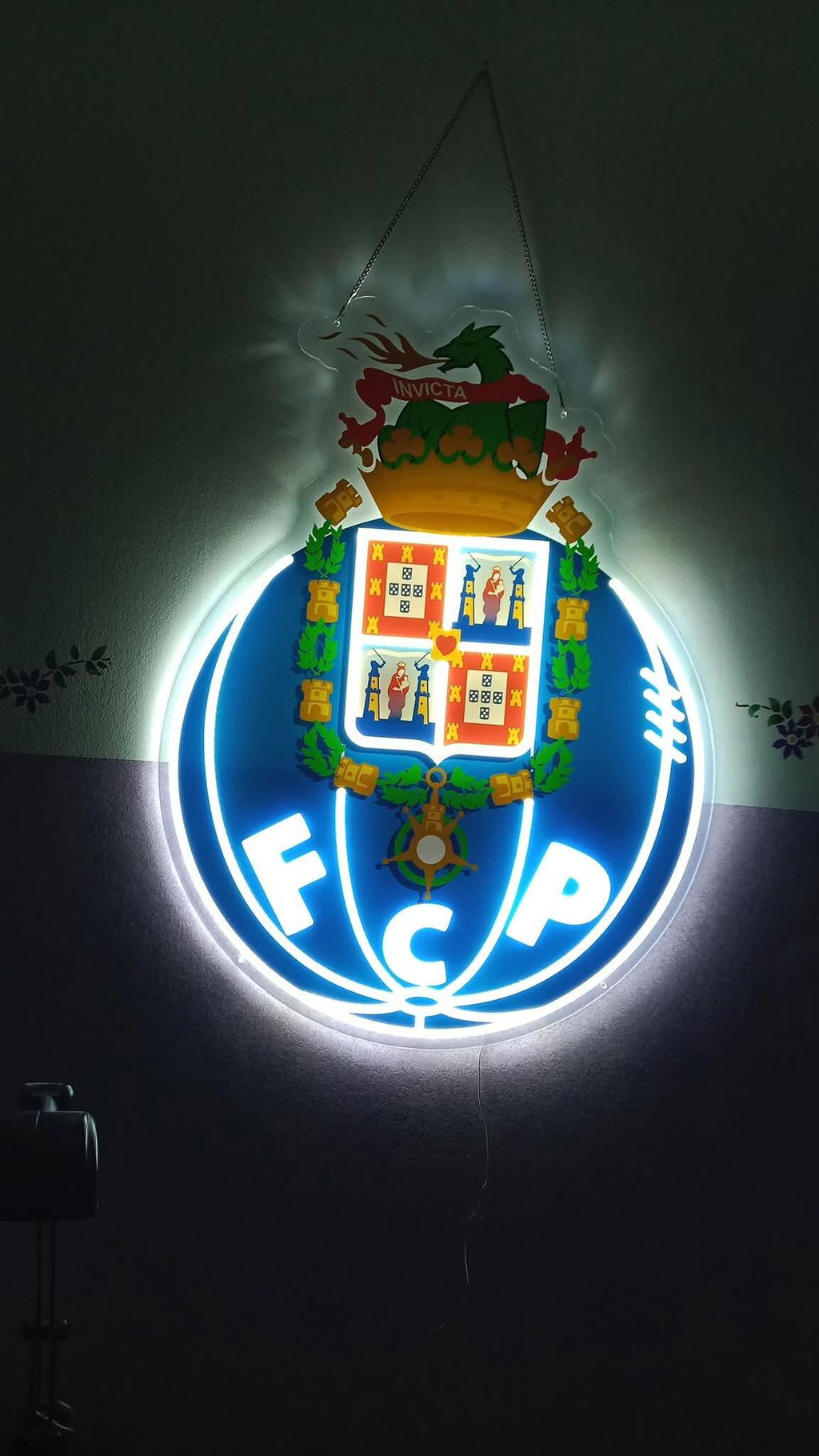

Three products get sold as "neon" and they aren't interchangeable. Neon rope light is a continuous flexible tube you run along a surface. A custom LED neon sign is bent into words, logos or shapes. EL wire is a thin glowing cord used mostly for costumes and craft.
They photograph almost identically. They're built differently, they cost very different amounts, and picking the wrong one is the most common mistake we see people make before they order.
This guide sorts out which does what, and — more usefully — why the lifespan numbers you'll find comparing them are mostly not comparable at all.
Key Takeaways
- Rope light is for lines. Custom neon is for shapes. If you want words or a logo, rope light won't get you there.
- EL wire isn't a signage product. Vendor spec sheets put it at roughly 30–90 cd/m², a fraction of neon's brightness, with some rating average life as low as 1,000 hours.
- The hour ratings you'll see compared are measured differently — half-life for EL wire, undefined thresholds for most LED claims. Comparing them directly is meaningless.
- Rope light is usually cuttable; a custom sign is not. That's a feature of one and a non-issue for the other.
- Cheapest per foot is rope light. Cheapest overall depends entirely on what you're trying to make.
What's the Actual Difference Between These Three?
The difference is what each one is shaped into, and how it makes light.
Neon rope light (also sold as LED neon flex) is a flexible silicone or PVC tube with LEDs inside, diffused so the tube glows evenly along its length rather than showing dots. It comes on a reel, by the foot. You bend it in gentle curves and mount it along something — a cove, a stair edge, a bar front, a patio beam.
A custom LED neon sign uses the same underlying flex tube, but it's been bent into a specific design, mounted on a backing, and wired as a finished unit. You're paying for the fabrication and the design, not the material.
EL wire is a different technology entirely. It's a thin copper core coated in phosphor; apply alternating current and the phosphor emits light along the whole cord. No LEDs. It's genuinely thin — a few millimetres — which is why it ends up sewn into costumes and taped to bikes.
That last point matters more than the spec sheets. EL wire's keyword universe is hoodies, masks, dresses, car interiors and festival costumes. That's not a slight against it; it's just what it's good at.
Which Is Better, Neon or LED Strip Light?
For anything meant to read as neon, the diffused tube wins, and it isn't close.
A bare LED strip shows individual diodes as visible dots. From a distance it reads as a line of points, not a continuous glow. Neon flex solves exactly this with a diffusing sleeve, which is the whole reason it exists as a separate product.
Where plain strip still wins: hidden installations. If the light source is tucked behind a valance or under a cabinet and you only see the wash it throws, you're paying for diffusion you'll never look at. Use strip there.
The honest rule — if you can see the light source, you want diffused. If you can't, you don't.
Worth separating this question from a related one that comes up constantly: LED neon versus traditional glass neon is a different comparison, about tube technology rather than form factor. Our guide to flex neon vs glass neon covers that properly, including where glass still has the edge.
Why Are Neon Lights Not Used Anymore?
They are — but the word "neon" shifted meaning, which is what's behind the question.
Traditional glass neon uses gas-filled tubing on a high-voltage transformer. It's still made, it's still beautiful, and it's still the right choice for certain restoration and heritage work. What changed is that it stopped being the default. Glass is fragile, heavy, slower to make, and runs on high voltage, which brings installation and servicing constraints that most buyers would rather avoid.
Meanwhile the LED version got good enough that it took the name. Most of what's sold as a "neon sign" in 2026 is LED flex, and most people searching for neon signs aren't picturing gas tubes at all.
So the honest answer: glass neon didn't disappear, it became a specialty. The mass market moved to LED because it survives shipping, runs on low voltage, and can be hung by one person without a licensed installer.
About Those Lifespan Numbers
Here's the part most comparisons get wrong, and it's worth slowing down for.
You'll see tables confidently putting EL wire at 5,000–8,000 hours, glass neon at 8,000–15,000, and LED neon at 50,000–100,000. Those figures circulate widely. The problem is that they're measured against different thresholds, which makes stacking them in one table misleading.
What the vendor documentation actually says, when you read it:
- A distributor's published EL wire spec sheet gives an average life of 1,000 to 5,000 hours — a fivefold range within a single product line.
- A high-brightness EL wire in that same range is rated at a 3,000-hour half-life — meaning the point at which it's lost half its brightness, not the point at which it fails.
- The most widely circulated EL-versus-neon table rates EL at 5,000–8,000 hours and glass neon at 8,000–15,000. It's published by a manufacturer selling one side of that comparison.
- LED neon products commonly claim 50,000–100,000 hours without stating the brightness threshold at all.
A half-life figure and an unqualified "lifespan" figure are not the same measurement. Lighting manufacturers normally quote L70 — hours until output drops to 70% — and independent lumen-maintenance testing exists for exactly this reason. Almost none of the EL-versus-neon comparisons floating around cite it.
What we'd actually tell you: ignore the headline hour counts and ask two questions instead. What brightness threshold does that number refer to, and who measured it? If a seller can't answer either, the number is marketing. In our experience the practical failure point on an LED sign is almost never the diodes reaching end of life — it's the power adapter, years earlier.
That last point is worth dwelling on, because it reframes the whole question. We troubleshoot far more signs killed by a failed adapter than by worn-out LEDs. Our guide to how durable LED neon signs really are goes into what genuinely determines lifespan, and the repair guide covers diagnosing the adapter when something does go wrong.
How Bright Is EL Wire, Really?
Dim, by signage standards — and that's the single fact that decides most of these comparisons.
EL wire spec sheets put brightness in the range of 30 to 90 cd/m², with "high brightness" versions around 70. For contrast, that same manufacturer-published comparison puts glass neon at 300 to 800+ cd/m². Even allowing generously for inconsistent test methods between sellers, that's a different order of magnitude.
What this means practically: EL wire reads beautifully in a dark room, at night, or on camera. In a lit retail space, a sunlit window, or anywhere with ambient daylight, it largely disappears. A storefront sign that vanishes during business hours isn't a sign.
There's a second issue that's less discussed. EL wire fades rather than failing outright, and the fade starts early. One user account describes it getting "duller and duller" within a couple of weeks of use — anecdotal, but consistent with a half-life measured in low thousands of hours. A sign that's visibly dimmer after a season is a different product from one that holds output for years.
Can LED Neon Rope Lights Be Cut?
Usually yes, at marked intervals — and this is where rope light and a custom sign genuinely diverge.
Most neon flex sold by the reel has cut marks every few centimetres, corresponding to the internal circuit segments. Cut on the mark, seal the end with the supplied cap and glue, and it works. Cut between marks and you kill the segment.
Three things people get caught by:
- Cutting voids the waterproof rating. A field-cut end has to be sealed properly or outdoor use is off the table.
- There's a maximum run length per power supply. Exceed it and you get visible dimming toward the far end from voltage drop.
- High-voltage 120V rope light is a different animal from low-voltage 12/24V and has its own cutting rules. Check which you have before reaching for scissors.
A finished custom sign, by contrast, isn't cuttable at all — the runs are sized to the design and terminated at fabrication. That's not a limitation so much as the point: you're buying a shape, not a length.
So Which One Should You Buy?
Work backwards from what you're making. It resolves quickly.
| If you want… | Buy | Why |
|---|---|---|
| Words, a name, a logo, a shape | Custom LED neon sign | Only option that can be bent to a design and mounted as a unit |
| A glowing line along a cove, stair or bar | Neon rope light | Sold by the foot, cuttable, cheap per metre |
| Hidden accent light behind a valance | Plain LED strip | You're not looking at the source, so skip paying for diffusion |
| A costume, prop or bike for one night | EL wire | Thin, sewable, cheap, and dark-room brightness is enough |
| Anything outdoors or commercial | Certified LED neon | Needs a rated enclosure and a certification mark an inspector accepts |
The mistake worth naming: buying rope light by the reel hoping to bend it into words yourself. People try it, and the results are usually rough. Freehand bending without a jig or backing gives uneven curves and sagging letterforms, the cut-and-seal points land in awkward places, and the mounting is the hard part rather than the bending. It can be done well, but it's a fabrication job, not an afternoon.
If it's going outdoors or into a leased commercial space, there's a further constraint that has nothing to do with looks: the sign needs a certification mark your electrical inspector will accept. Reel-bought rope light assembled into a sign generally doesn't carry one as a finished assembly. Our guide to CSA and UL certification for signs explains why that distinction matters, and it's the single most expensive thing to discover late.
Frequently Asked Questions
Is EL wire the same as neon?
No. EL wire is electroluminescent — a phosphor-coated copper core that glows when fed alternating current. It contains no LEDs and no gas. It's far dimmer than either glass neon or LED neon, with vendor sheets citing roughly 30–90 cd/m², and it's typically used for costumes and props rather than signage.
Can I make a neon sign out of rope light myself?
Physically yes, well is another matter. Freehand bending without a jig or backing gives uneven letterforms, and mounting is harder than bending. The bigger issue for commercial or outdoor use is certification: a self-assembled sign generally doesn't carry a mark as a finished assembly, which is what an inspector asks about.
Which lasts longer, EL wire or LED neon?
LED neon, by a wide margin. But treat the published hour counts carefully — EL wire is often rated by half-life, meaning 50% brightness loss, while LED claims frequently state no threshold at all. The two numbers measure different things. In practice the power adapter usually fails long before either light source does.
Is neon rope light bright enough for a storefront?
For accent and outline lighting, generally yes. For readable signage in daylight it depends entirely on the product — and the sign needs to be built and certified for outdoor use, not just bright. EL wire is not bright enough for a lit or sunlit environment at any specification.
Why is a custom neon sign more expensive than rope light?
Because you're not buying the material. A reel of flex is cheap per metre; a custom sign is bending, backing, mounting, wiring and testing to a specific design. The tube is a small share of the cost, which is why comparing a custom sign to a reel on price per foot doesn't tell you anything useful.
The Short Version
Rope light makes lines. Custom neon makes shapes. EL wire makes costumes. Match the product to the thing you're actually building and the decision stops being difficult.
And when you hit a comparison table full of confident hour counts, check what threshold they were measured against. Usually nobody says — which tells you how much weight to give them.
If what you want is words, a logo or a shape, that's a fabrication job: browse our custom LED neon signs, or send us your artwork and we'll tell you honestly whether a sign is the right answer for it.
A Note on the Figures
Every brightness and lifespan number in this article comes from manufacturer and distributor documentation published by companies selling the products described — checked in October 2026. We've named the type of source rather than the brand throughout, because the point isn't which company said it. The point is that all of these figures are vendor-published, none state a common test threshold, and several come from businesses with a stake in the comparison.
Where sources conflict or omit their threshold, we've said so rather than averaging them into one tidy number. If you want to verify any figure, the relevant spec sheets are easy to find by searching the product type — and reading one is the fastest way to see the problem for yourself.